Audition Spectral View

I’ve been meaning to start a blog series covering basic Audition workflows and tools for some time now. Our documentation and promotional teams do a great job showing off what’s new in each release, but we don’t offer a lot of in-depth training material for Creative Cloud members just getting started. It is my goal with this ongoing series to cover the topics that help our readers become masters with Audition and audio editing.
- Spectral Frequency View Audition
- Audition Spectral Viewing
- Audition Spectral Viewer
- Audition Spectral Views
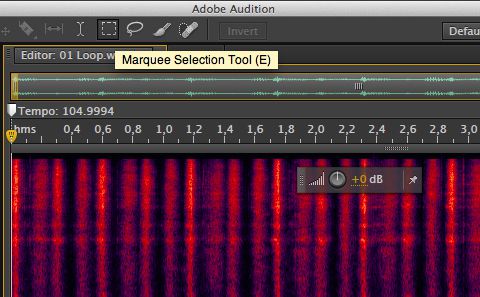
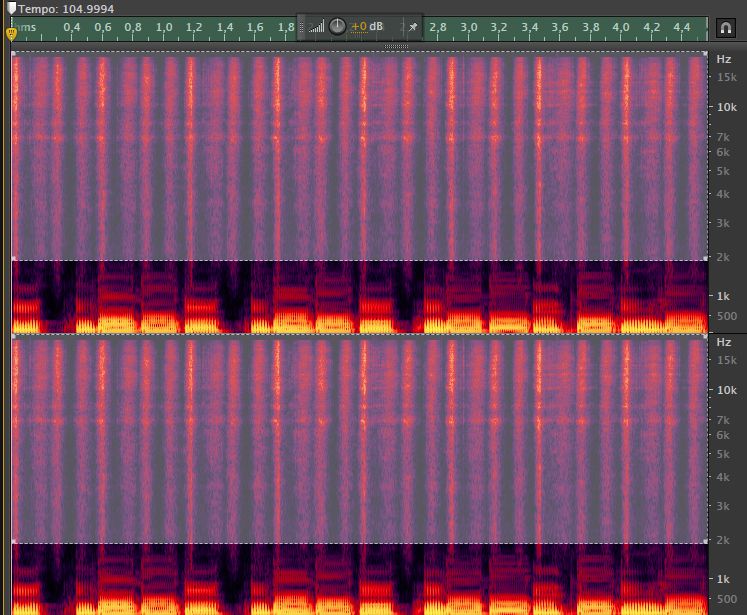
- Switching over to spectral view gives you a good idea of your room tone, and you can quickly snap a sample of the noise you’d like to reduce before you begin to attack the problem. This allow you to surgically profile ONLY the frequencies and artifacts you’d like to target, leaving your source material alone.
- Spectral Selection is used to make selections that include a frequency range as well as a time range on tracks in Spectrogram view. Spectral Selection is used with special spectral editing effects to make changes to the frequency content of the selected audio. Among other purposes, spectral selection and editing can be used for cleaning up.
Audition is a deep application with a long history and a wide variety of users, so it’s no surprise that its terminology and interface can feel intimidating to artists and professionals from other disciplines. But apart from a few new words and slight conceptual differences with other production tools, crafting incredible-sounding audio with Adobe Audition can be a simple and fun experience!
– Spotting noise in the Spectral Frequency View of Adobe Audition CC. – Setting up a Noise Gate for your podcast. – Rolling off bass rumble picked up by your podcast microphone. Video: Top, Tail & Remove Mistakes (5:29) – Top and tail your podcast using the Crop feature in Adobe Audition CC. – Removing umhs and aahs in the Waveform view. Adobe Audition (commercial) - Spectral Frequency Display produces a spectrogram for existing waveforms and Frequency Analysis can show a real-time spectrum Sonic Visualiser (open source) - spectrum or spectrogram for pre-existing waveforms Visual Analyser (freeware) - can show a realtime spectrum, too, though I don't trust the THD measurement.
WAVEFORM vs. MULTITRACK
Audition has two primary editing environments. Multitrack offers a non-destructive clip-based workspace, where you arrange new or imported audio files on a timeline, blending and fading between tracks, and adding real-time processing effects like Reverb or Compression to your clips. (We’ll cover Compression in another post, so don’t worry about it yet.) Multitrack editors re-arrange pieces, modify timing, and adjust loudness levels for each piece until perfect, then render their project into a final audio file – often WAV or MP3. This workflow only uses existing media or creates new media, but never makes changes to the original files. Multitrack view is often the workspace of choice for video post-production, podcast and radio show creation, and musical composition.
Waveform view, on the other hand, is a destructive waveform editing workspace capable of in-depth analysis and sample-accurate selections and processing. Many effects and tools available in this workspace require multiple passes or are not real-time compatible, and result in changes to the actual data recorded in an audio file. This means that if you make a change to a file in Waveform view and click Save, you are usually overwriting the contents of the file you edited. This distinction can be tricky for users used to non-destructive NLE or DAW applications to wrap their heads around.
Now, why on earth would Audition support modifying your files? Surely someone must be off their medication to allow such a tool! Not really. One of earliest adopters of Audition (and its predecessor, Cool Edit Pro) were radio journalists under exceptionally tight deadlines. These folks had no time for creating multitrack projects, importing assets, or rendering a mixdown before exporting to the particular flavor of MP2 or WAV their playback automation system supports! Recording a single report quickly, deleting the “umm”s as fast as possible, and exporting directly to disk enabled them to work as fast as the news happened. In forensics and archival industries, Audition’s Spectral Frequency Editing environment allows selecting specific sounds and manipulating recordings as easily as using Windows Paint. Restoring bad recordings into usable or even good, clear audio files can mean proving an alibi in court, understanding Edison’s voice, or hearing a whale’s song.
These two worlds collide when double-clicking a clip in Multitrack opens it in Waveform view. You can make destructive edits to your assets in Waveform view, that directly change the content in Multitrack view. In most cases, this is good! Perhaps there’s a bad hum or background noise, or a production assistant’s cell phone chime occurred during the best take of a scene. Maybe you want to create an effect where a sound effect speeds up and slows down. Or you might need to remove some or all of the clicks and pops from a drum loop captured from an old vinyl record. If you make a change to an original file used in a Multitrack session, Audition will ask if you wish to save the edited file the next time you save your session.i
Spectral Frequency View Audition

But if you want to avoid any possibility of destructively modifying your media files, consider working from backup copies of your assets, keeping the originals on a separate storage device. Then you can always restore the file and revert any changes made to an audio file. Also, before double-clicking a clip to open in Waveform view, right-click and choose Convert to Unique Copy. This will render the contents of the clip to a new file and relink the clip. (Similar to Render and Replace in Premiere Pro.) Any edits performed in Waveform view will only be applied to the copy.
Have a question about editing or mixing audio? Share it in the comments or via email to audbugs@adobe.com and we’ll try to answer it in an upcoming Audition Basics article.
1. Waveform Vs.Multitrack
Audition has two main views for working with audio. Waveform view is where you perform detailed edits on individual audio files, either in regular transient view or one of the two spectral views available. This is good for the more forensic tasks – identifying clicks, pops or clipping, and reaching inside sounds to alter certain frequencies spectrally. Multitrack view is much more like how a DAW works: a linear, stacked group of tracks. You can use this either to record and mix sound in a conventional sense – say, recording a band – or to create audio montages, multitracking different sounds over time. This approach is ideal for sound to video, podcasts, radio broadcasts and the like.
2. Apply effects to parts of clips
There’s a difference in Audition between effects that are applied to a track and those applied to a clip. Track FX are basically like inserts in a DAW, affecting all audio on the track and being processed in realtime. Clip FX are applied onto a clip, but don’t affect any other clips on the same track. Within a clip effect you also have the option of selecting just a part of the waveform and applying an effect (or several effects at once) to that area. In the FX rack, select Process Selection Only and hit Apply. By doing this you can for example apply compression just to one loud part of a clip, but leave the rest untouched.
3. Understand Fades
Audition will automatically create fades when you drag one clip over part of another clip on the same track in Multitrack view. This means you don’t have to do it yourself and it’s a great tip for quickly overlapping sounds without creating jarring transitions. You can manually adjust the fade curves by picking up their handles (the grey boxes) and these also exist at the start and end of any clip. So to fade between clips on different tracks, simply drag one fade curve out and the other one in. No processing required.
4. The FX Rack is more flexible than you might realise
The FX rack is a great way to manage the realtime or “glued down” processing you choose to apply to clips. As well as having 16 slots per clip or track, it also has a bunch of ready made presets for all kinds of common tasks, and of course you can save your own presets from the window as well. It also has input and output level controls for the rack as a whole, and most importantly, a dry/wet master control. This enables you to control how much of the effected signal is blended with the dry, regardless of whether you’re using one effect in the rack or all 16 slots.
5. Know Your Workspaces
Audition Spectral Viewing
Each of Audition’s many sections can be called up or hidden from the Window menu, and window borders can be dragged manually. All sections can also be undocked from the main one-window interface so that they float, and re-docked by dragging their title bars to an area. At the top of the main window is a menu containing various preset workspaces and you can quickly flip between these to call up different combinations of tools and displays. If you select Window > Workspace and choose Edit Workspaces you can manage the list, creating your own custom ones as well. Although the single window interface is perfect for laptops, and very flexible, if you are working on a bigger project it can be helpful to spin off, say, the mixer to its own window so you can get a better view of everything.
6. Get Inside Frequencies With Spectral View
By switching into Spectral view from Waveform view, you will see a visual representation not just of the amplitude of a clip but also its frequency characteristics. The tools that then become available – select, lassoo, paint brush and healing brush – allow you to select frequencies visually and perform actions on them. In this way you can for example find a background noise that occurs during someone’s speech, and effectively delete it. Using regular EQ tools this would be almost impossible to do without affecting the speech. There’s also a spectral pitch view that lets you see different pitches represented graphically.
7. Batch Process Files
Sometimes, you need to change the properties or format of a bunch of files. Audition’s batch processor lets you do this easily, and has presets for things like normalizing files, removing hum, removing vocals and so on. You can also use it to convert lots of files to new formats – 48kHz WAVs to 44.1kHz MP3s, for example. You can choose to keep these files inside Audition’s browser for use in a project, or fire them out to your hard drive so they exist independently and can be transferred to other apps.
8. Know About Essential Sound

The Essential Sound panel which can be invoked from the Window menu is an interesting addition to the CC world. What it does is let you assign a type to any clips in a project – dialogue, music, sfx or ambience. Each of these categories has its own set of effects / parameters that can be controlled like EQ, dynamics, enhancement and so on. These provide a quick way to clean up or process types of clip instead of using the FX rack.
Audition Spectral Viewer
Audition Spectral Views
More importantly, these characteristics and tags are kept when you fire audio projects through to Premiere, provided you’re using the latest version of both apps. This means that audio data can be much more easily tagged, organised and recognised in both apps. For anyone working with multichannel video projects this is great news as it really speeds up your audio workflow when dealing with multiple audio tracks along with video. It’s also good with radio or podcast projects.